> Spanish Courses at Alicante > Alicante City
About Alicante
Alicanteis the capital city of the Alicante province in the Autonomous region of theValencian Community. Alicante is the 5thmost populated province in Spain with its population of over 1,700,000 people;the city of Alicante is home to about 320,000 of those inhabitants. Alicante, like the rest of the province, has2 official languages: Castellano (or traditional Spanish) and Valenciano,although the majority of people speak traditional Spanish.
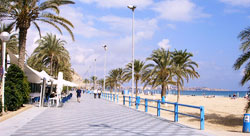 Similarto the rest of mainland Spain, it is possible to get from Alicante to otherbigger cities in a matter of hours; between 4-5 hours you can reach Barcelona,Madrid, or Málaga.
Siutated only about 50 km from Alicante you can arrive in Benidorm orDenia. These two popular tourist resortareas over great recreation activites and some amazing beaches on Spain's CostaBlanca. The Costa Blanca is a largeresource for Alicante's economy. It is afast-growing region with a big draw for tourists. Apart from the beach and sun tourism Alicante is also a very popular destination to learn Spanish Alicante and many youngster come from all over the world to learn Spanish at the University of Alicante or in one of the many private language schools in Alicante.
Similarto the rest of mainland Spain, it is possible to get from Alicante to otherbigger cities in a matter of hours; between 4-5 hours you can reach Barcelona,Madrid, or Málaga.
Siutated only about 50 km from Alicante you can arrive in Benidorm orDenia. These two popular tourist resortareas over great recreation activites and some amazing beaches on Spain's CostaBlanca. The Costa Blanca is a largeresource for Alicante's economy. It is afast-growing region with a big draw for tourists. Apart from the beach and sun tourism Alicante is also a very popular destination to learn Spanish Alicante and many youngster come from all over the world to learn Spanish at the University of Alicante or in one of the many private language schools in Alicante.
History
Theregion of Alicante has existed for over 7000 years. About 3000 B.C. hunter gatherers fromNorthern and Central Europe started to migrate to this area. Supposedly the first settlers made their homewhere the Castillo de Santa Barbara still stands today. Still 1000 years B.C. the Greeks andPhoenicians began to inhabit the eastern coast of Spain. After many rivalries between the Roman andCarthaginian armies, the Carthage reign built the first settlement on whichAlicante currently stands. Still theRoman strength was able to overtake the area, and ruled the land for manyyears. The Visigoths came in and rivaledthe Romans for some time, but neither were able to defend the land against theMoors. Still today many Moorish featuresare found throughout Alicante, such as art and architecture, as well as manyprominent products like rice.
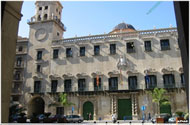 Inthe 11th century the Moors, who ruled much of Southern and EasternSpain, were overtaken by the Spanish Reconquista, and King Alfonso X ruled theland. In the following centuries thearea of Alicante became quite important as it was gaining a great deal fromgold that was being imported from South America.
Forabout the last 5 centuries Alicante was known as a very agricultural area. Like today, there was fertile land, plus thebenefits of being on the coast. Aninteresting fact about Alicante is that during the Spanish unrest of the 1930s,Alicante stayed loyal to the government; it was one of the last cities to beovertaken by Franco's army during the Spanish civil war.
Inmore recent years, Alicante has started to boom with tourism, much like theother coastal regions of Spain. It is apopular destination for many European vacationers, as well as people throughoutthe world. The port saw a decline in the1980s after Valencia's became more frequented, but now it has beenrehabilitated.

Transportation
- Airport: there is an international airport located justoutside the city, in a municipality called Elche. Getting to and from the airport is possibleby bus, taxi, or car. Several airlines use this airport, so it is possible tofly to many desinations in Spain and throughout Europe.
- Train: There is atrain station which services the RENFElines, connecting Alicante to the larger cities. The FGVtrain that runs along the Costa Blanca serving the coastal cities and resortareas
- Bus: There is a bus station in the city, many lines areprimiarly served by the company AlsaEnatcar and it is possible to reach many of Spain's biggest cities.There is also the local bus system, run by TAM. These buses have several routes through thecity, as well as the nearby suburbs.
- Foot: It is possible to roam around Alicante by foot, andoften times, this is preferred to be able to take in all the beauty and culturethe city has to offer.
Leisure
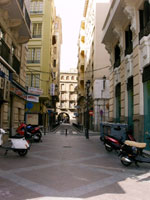 Alicantehosts a few markets where you can find anything from hand-made crafts, clothes,pottery, artwork and household items to food and flowers. To view some of these delights that thesemarkets boast talk a walk down Paseo delDoctor Gadea or along Explanada. You canfind some of Alicante's freshest seafood, produce, and flowers around theCentral Market on Avenida de Alfonso el Sabio.
Alicantehas many interesting attractions, as it is a university city there are a lot ofactivities for young people, but there are also many museums, monuments, andcultural happenings for everyone. Thecity dates back about 7000 years., therefore Alicante is full of historicalattractions, it also has very modern attractions such as the Tierra Miticaamusement park nearby.
Gastronomy
Similarto other coastal cities throughout Spain, Alicante's gastronomy is largelybased on the Mediterranean Sea. Fish andseafood is a very important and prominent part of the diet. Rice is also very prevalent in many of thetraditional dishes due to the deep Muslim roots found in the historical cultureof the area. Of course, like any trueMediterranean gastronomy, the use of olive oil can be found in Alicante'sreciepes as well as many products from the land. Alicante has an agricultural history whichstill blossoms today bringing fresh fruit and vegetables directly from theregion to the local consumers.
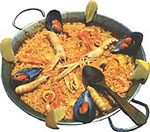 Paella isa famous dish known throughout Spain, but legend tells that it's roots comefrom the Valencian region. Paella is amix of meat and seafood, rice and some vegetables. It is cooked both for an everyday meal or formany people, it can be prepared in a big pan, this is done for festivites andcelebrations. Each chef has their own variations of this traditional recipe andit can be quite a fun experience to try preparing a paella dish yourself,especially with the fresh products right from Alicante.
Alicante wasalso the birthplace to a still widely known Spanish tradition,the tradition ofeating 12 grapes along with the chimes of the clock in the countdown of NewYear's Eve. In Alicante, in 1909, therewas a surplus of grapes that year. So the local farmers thought to do thisritual on New Year's Eve.
Also, if you happen to be in Alicante (or Spain in general) around Christmastry turrón which is a sweet varying in tastes, but normally of almondsand honey. This is made in Jijona, a town in the province of Alicante.
Going Out
Spain is knownfor having some of the best nightlife in the world, Alicante is noexception. Being a university city thereare many choices for students, but also a variety of options for anyone. There is a wide array of restaurants offeringtypical cuisine from Alicante and the Valencian region, as well as almost anyother type of food you could want. Beinga coastal city the main areas for going out in Alicante are split between theharbor and the city center. The areaaround the harbor has been greatly expanded and during the summer months thereare often a great number of professional art and musical performances to beseen. Just as the Explanada de España isa popular area during the daytime, head there at night to find all kinds ofpubs, cafés, bars and restaurants.
The area thatsits inland, just behind Explanada de España, is referred to as “la zona” andamong streets such as Paseo del Doctor Gadea, Calle de San Fernando, CalleAlemania and Avenida de Ramón y Cajal there is a lively ambience with nightclubs and discotheques. Plus morerelaxed bars and restaurants.
“El Barrio” orthe old quarter of the city is situated at the Co-Cathedral of SanNicolás. This area is said to bewelcoming for people of all ages and backgrounds. There is a charming feeling in the streets,and of course it is filled with options of places to dance, drink anddine.